
Infineon BFP520H6327 Low-Noise Silicon Germanium RF Transistor: Datasheet and Application Notes
The Infineon BFP520H6327 is a high-performance, low-noise Silicon Germanium (SiGe) RF transistor designed for applications requiring exceptional gain and minimal noise figure in the microwave frequency range. As a key component in modern wireless communication systems, this transistor offers a compelling blend of high-frequency operation, thermal stability, and reliability, making it a preferred choice for designers of low-noise amplifiers (LNAs), oscillators, and other sensitive RF front-end circuits.
Key Electrical Characteristics and Features
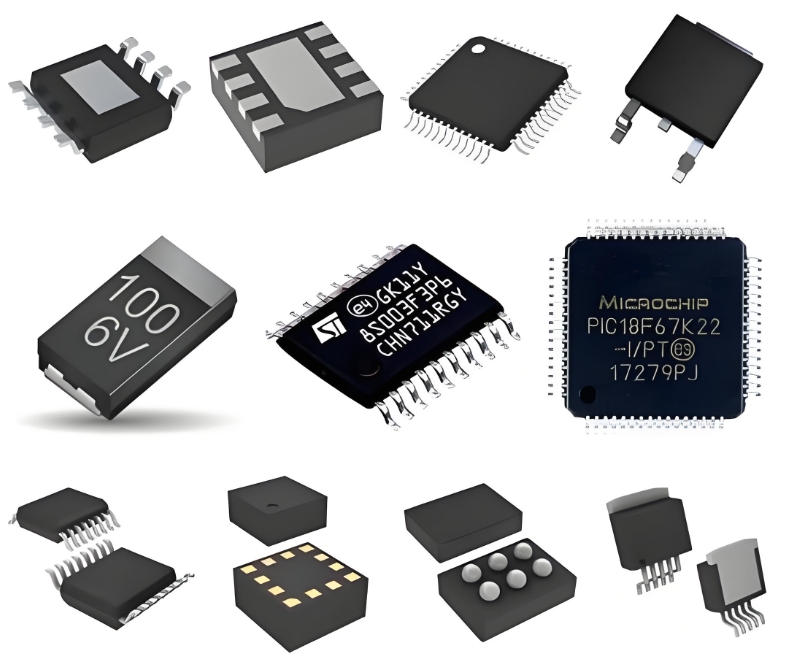
Housed in a lead-free SOT343 (SC-70) surface-mount package, the BFP520H6327 is characterized by its ultra-low noise figure, typically just 0.9 dB at 2 GHz. This exceptional performance is crucial for maximizing the signal-to-noise ratio (SNR) in receiver chains, directly impacting sensitivity and range. The transistor also provides high associated gain, typically 19 dB at the same frequency, ensuring sufficient amplification of weak signals.
Its SiGe technology enables excellent performance at frequencies up to 8 GHz and beyond, making it suitable for a wide array of applications, including:
Cellular infrastructure (GSM, UMTS, LTE, 5G)
GPS and GNSS receivers
Wireless LAN (Wi-Fi 5/6/6E) and IoT connectivity
Satellite communication systems
Test and measurement equipment
A critical feature highlighted in the datasheet is its high linearity (OIP3), which helps minimize distortion and intermodulation products when amplifying multiple signals. Furthermore, the device exhibits good thermal stability, supported by a low thermal resistance, ensuring consistent performance under varying operating conditions.
Datasheet Insights: Absolute Maximum Ratings and Thermal Management
The datasheet provides essential guidelines for reliable operation. Designers must strictly adhere to the Absolute Maximum Ratings to prevent device damage. Key limits include:
Collector-Emitter Voltage ($V_{CE}$): 3.5 V
Collector-Base Voltage ($V_{CB}$): 5.0 V
Emitter-Base Voltage ($V_{EB}$): 2.5 V
Collector Current ($I_C$): 25 mA
Total Power Dissipation ($P_{tot}$): 150 mW at 25°C
Thermal management is paramount. The maximum junction temperature ($T_j$) is 150°C. Proper PCB layout, including adequate grounding and thermal relief, is necessary to dissipate heat effectively and maintain the device within its safe operating area (SOA).
Application Notes for Optimal Circuit Design
To leverage the full potential of the BFP520H6327, several design considerations are critical:
1. Biasing for Low Noise: The noise figure is highly dependent on the collector current ($I_C$). The datasheet provides curves showing the optimum bias point for minimal noise, typically around 5 to 10 mA for many applications. A stable, low-noise bias network is essential.
2. Input and Output Matching: For LNA applications, the input circuit must be matched for minimum noise figure (often not simultaneously matched for maximum gain, known as a low-noise match). The output is typically conjugate-matched for maximum gain. The datasheet provides S-parameters ($S_{11}$, $S_{21}$, $S_{12}$, $S_{22}$) up to 8 GHz to facilitate accurate simulation and matching network design using Smith charts or EDA software.
3. Stability Considerations: Ensuring unconditional stability across the entire frequency band is crucial to prevent oscillations. The datasheet includes stability factor (K) curves. Using series feedback (e.g., a small emitter inductor) or shunt resistors can improve stability if required.
4. PCB Layout Best Practices: Implementing RF best practices is non-negotiable. This includes using a continuous ground plane, minimizing parasitic inductance and capacitance by keeping component leads short, and effectively decoupling the DC supply lines with a combination of capacitors to suppress low and high-frequency noise.
ICGOOODFIND
The Infineon BFP520H6327 stands out as a superior SiGe RF transistor, delivering an industry-leading combination of ultra-low noise and high gain for demanding microwave applications. Its comprehensive datasheet and the adherence to key application notes on biasing, matching, and thermal management empower engineers to design highly sensitive, robust, and efficient RF front-end systems for next-generation wireless technologies.
Keywords: Low-Noise Amplifier (LNA), Silicon Germanium (SiGe), Noise Figure, RF Transistor, S-Parameters.

