
Unlocking the Potential of the NXP MCF5282CVM80: A Comprehensive Guide to the ColdFire V2 Embedded Processor
The realm of embedded systems is built on the foundation of powerful, efficient, and reliable microprocessors. Among the many architectures that have shaped this landscape, Motorola's (now NXP's) ColdFire family holds a significant place. The NXP MCF5282CVM80, a prominent member of the ColdFire V2 core generation, stands out as a versatile solution for a wide array of demanding applications. This guide delves into the capabilities of this processor and explores how to harness its full potential.
At the heart of the MCF5282CVM80 lies the enhanced Version 2 ColdFire core, which operates at a clock frequency of 80 MHz. This core represents a major evolutionary step, offering a improved performance-to-power ratio compared to its predecessors. It features a 32-bit RISC-inspired architecture that executes a highly optimized instruction set, reducing the number of clock cycles required for complex operations and thereby increasing overall efficiency.
A key strength of the MCF5282CVM80 is its rich set of integrated peripherals, which drastically reduces the need for external components and simplifies system design. This system-on-chip (SoC) approach is crucial for creating compact and cost-effective designs. Notable integrated features include:
Ethernet Connectivity: A 10/100 Mbps Fast Ethernet controller (FEC) is embedded on-chip, providing immediate and critical connectivity for networked applications, from industrial control to networked sensors.
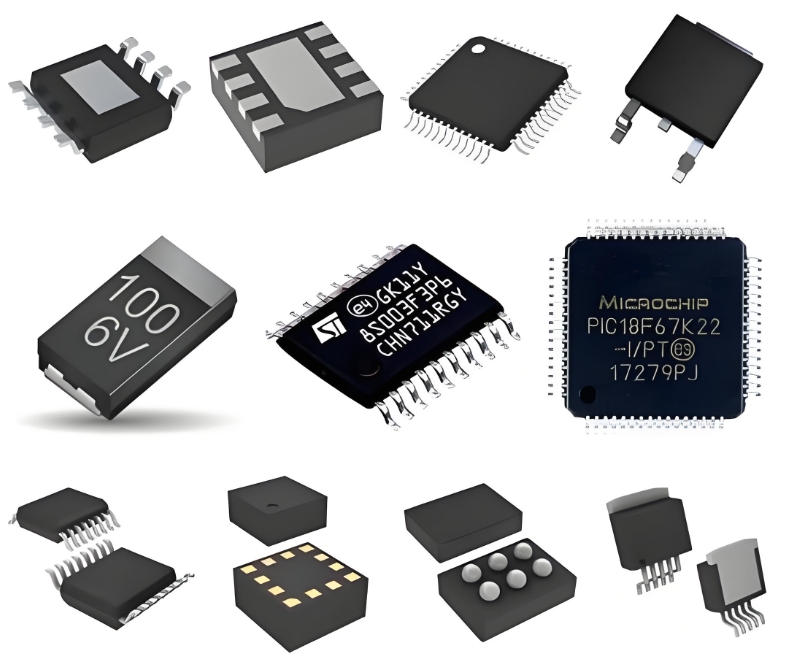
Memory Flexibility: The chip incorporates a SDRAM controller, which is essential for handling large volumes of data and running complex operating systems. It also includes integrated SRAM and a flexible memory controller for other memory types.
Abundant I/O Options: With multiple UARTs, I2C, and QSPI serial interfaces, the processor can easily communicate with a vast ecosystem of sensors, actuators, and other peripheral chips.
Timing and Control: It is equipped with a Programmable Interrupt Timer (PIT), a Watchdog Timer, and a Time Processing Unit (TPU), which offloads timing-critical tasks from the main CPU, making it ideal for real-time control applications.
The combination of processing power and integrated connectivity makes the MCF5282CVM80 exceptionally well-suited for a diverse range of applications. It has proven itself in industrial automation and control systems, where its reliability and real-time capabilities are paramount. It is a strong candidate for network routers, gateways, and firewalls, leveraging its integrated Ethernet controller. Furthermore, it finds use in medical devices, test and measurement equipment, and advanced automotive control systems.
Developing for the MCF5282CVM80 involves a familiar toolchain for embedded engineers. NXP (and formerly Freescale) provides robust software support, including drivers and libraries. Developers can use popular IDEs like CodeWarrior alongside modern GNU toolchains. Effective development requires a focus on low-level register manipulation to configure the powerful and flexible peripherals, followed by writing efficient C/C++ code to implement the application logic. Understanding the memory map and interrupt structure is critical for achieving optimal performance.
ICGOODFIND: The NXP MCF5282CVM80 remains a compelling choice for developers designing complex, connected, and real-time embedded systems. Its balanced architecture, which marries a efficient 32-bit core with a comprehensive set of on-chip peripherals, provides a powerful integrated platform that minimizes system cost and complexity. For engineers seeking a proven and capable processor for demanding embedded tasks, unlocking the potential of the ColdFire V2 architecture offers a path to creating robust and high-performance products.
Keywords: ColdFire V2 Core, Integrated Ethernet Controller, Embedded Systems, Real-Time Control, System-on-Chip (SoC)

